Fastener selection and use
The selection and use of fasteners is a comprehensive process involving many factors. The following is a detailed description of the main points of fastener selection and use:
First, the choice of fasteners
Clear application scenarios
Determine where the fastener will be used, whether to join two parts, support parts, or some other purpose.
Consider the environmental conditions in which the fasteners are located, such as indoor, outdoor, corrosive, high or low temperature environments.
Choose the right materials
Choose the right material according to the application environment, common carbon steel, stainless steel, alloy steel, etc.
Carbon steel is cheap and suitable for general environment, but its corrosion resistance is poor.
Stainless steel has good corrosion resistance and is suitable for wet and corrosive environments, but the price is higher.
Alloy steel has high strength and is suitable for high-stress and high-strength connections, but attention should be paid to anti-corrosion.
Determine thread type
Select the appropriate thread type as required, such as ordinary thread, metric thread, inch thread, etc.
Selective intensity class
Determine the strength level of the fastener according to the load and stress it needs to withstand.
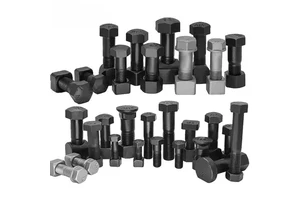
Usually used to identify the strength level of the bolt thread length, head marking or surface treatment.
Consider locking measures
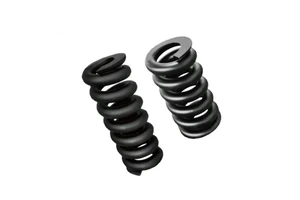
For the occasions that need to prevent loosening, you can consider using locking nuts, spring washers or applying anti-loosening glue.
Consider aesthetics and economy
Under the premise of meeting the functional requirements, consider the appearance and cost of fasteners.
Choose economical and practical products, while taking into account the fastener life and replacement cycle.
Second, the use of fasteners
Use the right tools
Install and remove fasteners using appropriate tools to avoid damaging fasteners and connectors.
Use torque or socket wrenches as much as possible to avoid excessive tightening caused by adjustable wrenches or electric wrenches.
Ensure proper installation
When installing fasteners, it is necessary to ensure their correct position and orientation.
Tighten according to the correct torque to ensure safety and stability.
Nuts must be rotated perpendicular to the axis of the screw, do not tilt.
Periodic inspection
For long-term use of fasteners, it is necessary to regularly check whether they are loose, damaged or deformed.
Loose or damaged fasteners should be replaced or repaired in time.
Prevent over-tightening
Over-tightening of fasteners may result in stretching, deformation, or damage to the material.
Care should be taken to avoid excessive tightening, especially when using high-strength materials.
Requirements for use in special environments
In a high temperature environment, the material and coating of fasteners need to have high temperature resistance.
Fasteners need to be resistant to corrosion in humid environments.
Third, fastener selection precautions
Compatibility with the environment
In some chemical or corrosive environments, fasteners with special coatings or materials may need to be selected to prevent corrosion.
Maintainability
In some applications that require frequent disassembly and reinstallation, choose a fastener type that is easy to operate and maintain.
Communication with suppliers or manufacturers
When choosing a fastener, communication with the supplier or manufacturer is crucial.
They can provide detailed information on fastener performance, application cases and installation recommendations to help users make more informed choices.